
An AI visibility audit for public adjusters is a $500 diagnostic that shows whether ChatGPT, Gemini, Claude, Perplexity, and Google's AI answers name your firm when a property owner in your licensed markets asks for help with a claim, and which firms they name instead. We run the questions owners ask, map the sources the models cite, and check whether your website is built for the models to read and trust. You receive a scorecard, a log of every prompt and answer, and a ranked list of fixes. It matters now because AI has become the new front door of this profession, and the firms named in those answers are the ones that meet property owners in the moment they need help.
AI Visibility Audit for Public Adjusters: Key Points
- What it is: a flat $500 diagnostic that tests whether the major AI tools recommend your firm in the markets where you hold a license.
- What it checks: the prompts owners ask, the sources the models cite, how the models describe your firm, AI crawler access, content gaps, review proof, and compliance.
- What you get: a scorecard, a prompt log with captures, a citation map, the firms named instead of yours, and a ranked fix list, walked through on a call.
- Why it matters: property owners now take hard questions to AI, and an AI answer names a short list of firms, not a page of ten results.
- Why us: ChatGPT and Claude both name Public Adjusting Marketing first among public adjusting marketing agencies, and the captures are public.
Why Is AI the Turning Point for the Public Adjusting Industry?
Every era of marketing has a moment when the front door moves. For public adjusters it moved from the phone book to Google, then to the map pack, and now to a direct answer. Pew Research Center reported in June 2026 that about half of U.S. adults use AI chatbots, about a quarter use them daily, and about four in ten use them to search for information.
Insurance is already part of that shift. J.D. Power's 2026 AI Insurance Experience Study, based on 8,352 customer evaluations, found that 29 percent of auto and home insurance customers use AI tools to research coverage, service their accounts, understand coverage before submitting a claim, or shop. Google reported in July 2026 that AI Mode had passed 1 billion monthly users, and OpenAI reports more than 900 million weekly ChatGPT users.
An AI Answer Is a Shortlist, Not a Page of Results
A results page gave a firm several chances: an ad, a map listing, an organic result, a directory. An AI answer gives a handful of names, sometimes one, and the owner reading it often never looks past it. A firm can hold strong rankings while the models recommend three competitors by name in its own cities, and nothing in its analytics will show what it lost.
The Moment of Need Now Starts With a Question
A property owner looks for help after a denied claim, an estimate far below the contractor's number, or a fire that left a family in a hotel holding a policy they have never read. They rarely type "public adjuster" first; they describe the problem, asking whether they can dispute an estimate or who can help with a denied roof claim in Houston. Those are questions, and questions are what AI answers.
Meeting property owners in the moment used to mean being on the right street at the right time. Now it means being the answer when they ask, and the firm whose content answers the question plainly is the firm the model is most likely to cite and name.
Education Is How This Profession Raises Its Own Bar
Public adjusting has long been described by its worst actors: storm chasers, aggressive door knockers, and operators who vanish after the check. AI rewards depth, accuracy, and consistency, so the firms that explain the claims process plainly, publish what their fees mean, and show real reviews from real files are the ones the models learn to trust. The next level for this industry is not louder advertising; it is useful, compliant content that meets owners where they already are, and every firm that builds it makes the whole profession easier to trust.
What Does an AI Visibility Audit for Public Adjusters Check?
The audit answers one question with evidence: when someone in your market asks AI for help with a property claim, does your firm come back, and if not, why not? We check seven areas, and each one maps to a fix.
The Prompts Property Owners Ask in Each Licensed Market
We build a prompt set for each market where you hold a license: the problem-first questions owners ask after a loss, the direct "who can help me" questions, and the comparison questions. We run them in ChatGPT, Gemini, Claude, Perplexity, and Google's AI answers, more than once because answers vary by session, and log each result as named, cited, mentioned, or absent, along with the firms named instead.
The Sources the Models Cite When They Answer
AI answers are assembled from sources, and many of them are visible. We map the websites, directories, news outlets, review platforms, and competitor pages the models cite for your prompts, which shows exactly where your firm needs to be present for the models to find it.
How the Models Describe Your Firm Today
We check whether the models have your name, locations, services, and licensed states right, and whether they confuse you with a similarly named company or lump you in with contractors. A model that has your firm wrong will recommend it wrong, or not at all, and the fix starts with consistent facts across your site, your Google Business Profile, and the directories the models read.
Whether AI Crawlers Can Read Your Website
Some firms are invisible to AI for reasons unrelated to content: the site blocks AI crawlers, hides its text behind scripts, or loads too slowly. We check the robots.txt rules for the major AI crawlers, the schema on key pages, the llms.txt file, and whether pages lead with direct answers, the same foundations covered in our guide to technical SEO for public adjusters.
The Questions Your Content Leaves Unanswered
We compare the questions owners ask in your markets against the pages you have published. The questions that drive AI answers are specific, such as hurricane deductibles, smoke claims, underpaid roof estimates, appraisal, and how fees work, and every unanswered one is a place where the model cites someone else. The gap list becomes your content plan.
The Reviews and Third-Party Proof the Models Weigh
Models lean on what other people say about a firm. We review your Google rating, review count, and review recency, and whether your firm appears on the directories and publications cited in your market. Independent citations are a large part of why one firm gets named and another does not, which is the work behind earning backlinks for public adjusters.
A Compliance Read on Everything AI Can Find
AI systems repeat what a firm has published, so noncompliant content can be quoted back to an owner. We flag language that implies a property has damage without an inspection, reads as a deductible inducement, suggests you work in states where you hold no license, or presents your firm as the insurer's adjuster. State law controls, and this is education rather than legal advice.
If AI Cannot Find Your Firm, Neither Can the Owner Asking It.
Most firms have never seen what ChatGPT or Gemini says when someone in their city asks for help with a denied claim. Our $500 AI visibility audit shows you those answers, the firms named instead of yours, the sources behind them, and the fixes in order. It is a clear baseline you keep, whether we work together or not.
What Do You Get for $500?
The audit is a flat $500, one time, with no retainer attached. You receive a scorecard of how often your firm is named, cited, or absent by tool and by market; the full prompt log with captures, so you can rerun any prompt yourself; the citation map; the firms named instead of yours; and a ranked fix list with quick fixes separated from longer builds. We walk through all of it with you on a call.
Why a Flat $500 Instead of a Free Sales Pitch
Free audits tend to be sales documents: a few alarming numbers with a proposal stapled to the back. We priced this one to be real work, with enough prompts, sessions, and markets to show a pattern rather than one lucky answer, and it gives you a baseline to measure any agency against, including us.
How the Audit Differs From a Free Consultation
On our free consultation we still run a few of your market's prompts live. The audit is the documented version: the full prompt set across every tool and licensed market, repeated across sessions, with the citation map and the ranked fixes written down.
How Has Public Adjusting Marketing Taken Over AI in Its Own Category?
An agency selling AI visibility should be able to show its own. Ours is public, unedited, and reproducible, and it was earned in a field where other agencies had years of head start.
Two Different AI Models Put Our Name First
Ask ChatGPT for the top five public adjusting marketing agencies and it lists Public Adjusting Marketing first. Ask Claude, a different model from a different company, and it names us first too. Both captures are published unedited in the receipts on our page about the best public adjuster marketing agency.
The Keywords We Sell, With Our Firm on Top
The same receipts show searches for the services we sell, public adjuster PPC, public adjusting marketing agency, public adjuster SEO, and public adjusting AI optimization, with our firm on top. Search visibility and AI visibility feed each other, because the models draw heavily on pages that already rank and get cited.
A Category We Entered Late, Taken Within a Month
We took over the public adjusting marketing keywords within a month of launching our new website, against agencies that had worked this niche for years, and became the top AI recommendation in our own category in a market we entered late. That speed comes from knowing which structure the models reward and building it right the first time.
A $7 Million a Month Testing Lab During the AI Shift
Rob was directing $7,000,000 a month in combined SEO and advertising for personal injury law firms as AI answers began swallowing results. That budget made every theory about AI visibility testable against real cases, and the story of how it became our method is in our answer to who does AI optimization for public adjusters.
We Run the Same Audit on Our Own Brand
We test a mapped set of 24 prompts for our own brand across ChatGPT, Gemini, Perplexity, and Google's AI answers on a schedule, and every new article we publish is written to answer specific prompts in that set. We also keep an llms.txt file current and publish schema and FAQ markup on our articles.
Our AI Receipts Are Public. Yours Can Be Next.
We built our AI visibility on our own domain first, then published the proof for anyone to check. The same structure of prompts, schema, citations, and answer-first content is what we build for public adjusting firms in the markets where they hold a license. Start with a free consultation, and we will show you where your firm stands today.
What Happens After the Audit Shows the Gaps?
The audit is a diagnosis, and the fix list is written so any capable team can act on it. Some firms hand it to their current agency or handle the quick fixes in-house; many ask us to do the work, which is what our public adjusting AI optimization service is built for.
Quick Fixes First, Then the Lasting Build
Most audits turn up fixes that take days: a crawler rule, a missing schema type, a profile with the wrong service area. The durable work is slower, answer-first pages, city pages for each licensed market, steady reviews, and third-party citations, and our guide to how public adjusters show up in ChatGPT and AI search covers that playbook in depth.
Rerun the Prompts and Measure the Change
Because the audit logs every prompt, you can rerun the same set in 90 days and compare: named in this many answers before, this many after. That turns AI visibility from a feeling into a number, and it keeps any agency, ours included, accountable.
Which Firms Should Book an AI Visibility Audit First?
Four situations make the audit especially timely. A firm with strong Google rankings whose name never comes up in AI answers has a gap its analytics cannot show. A firm expanding into a newly licensed state wants to know which competitors the models favor there, a firm heading into storm season wants its foundation checked while there is time to fix it, and a firm weighing agency proposals can use the audit as a neutral baseline for every pitch.
Owners Are Already Asking AI for Help. Will Your Firm Be the Answer?
AI is the turning point for public adjusting because it changes who gets found at the moment of need. The firms that publish useful, compliant answers will meet property owners when they ask, and the rest will wonder why their phones got quieter. Every piece of public adjuster marketing we build starts with a baseline, and the audit is that baseline for the new front door; Public Adjusting Marketing earned its own position in AI first and would be glad to show you where yours stands.
See What AI Tells Owners About Your Firm. Then Fix It.
Our $500 AI visibility audit runs your market's real prompts across ChatGPT, Gemini, Claude, Perplexity, and Google's AI answers, maps the sources behind every answer, and hands you a ranked fix list on a walkthrough call. It is a flat fee, one time, and the report is yours whether you hire us or not.
Frequently Asked Questions About the AI Visibility Audit for Public Adjusters
What is an AI visibility audit for public adjusters?
An AI visibility audit for public adjusters is a diagnostic that tests whether ChatGPT, Gemini, Claude, Perplexity, and Google's AI answers recommend your firm when property owners in your licensed markets ask for help with a claim. It logs every answer, maps the sources the models cite, and ends with a ranked list of fixes.
How much does an AI visibility audit cost?
An AI visibility audit for public adjusters from Public Adjusting Marketing costs a flat $500, one time, with no retainer and no obligation to hire us afterward. The price covers the full prompt set across the major AI tools and each licensed market, the citation map, the list of firms named instead of yours, the ranked fixes, and a walkthrough call.
Which AI tools does the audit test?
An AI visibility audit for public adjusters tests ChatGPT, Gemini, Google's AI answers in search, Claude, and Perplexity. Each prompt runs more than once, because answers vary by session and a single capture can mislead. Results are broken out by tool, since a firm can be named often in one system and be missing from another.
What does a firm receive when the audit is finished?
An AI visibility audit for public adjusters delivers a scorecard of how often your firm is named, cited, or absent, the full prompt log with captures, a citation map, the firms named instead of yours, and a fix list ranked by impact. We walk through it with you on a call, and the report is yours to keep.
Should a firm with strong SEO still get an AI visibility audit?
An AI visibility audit for public adjusters is often most useful for firms whose SEO already works. The models lean on pages that rank and get cited, so strong SEO helps, but rankings do not guarantee a recommendation, and the audit shows whether the models name you. An AI answer names a short list, so being absent costs more than ranking fifth once did.
How long until a firm shows up in AI answers after the audit?
An AI visibility audit for public adjusters usually surfaces fixes that take days, like opening a blocked crawler or correcting a directory listing, and work that builds over months, like answer-first content, steady reviews, and third-party citations. No responsible agency can promise the date a model will name your firm; what we can show is how quickly we built our own position.
Can a public adjuster market through AI without breaking solicitation rules?
An AI visibility audit for public adjusters includes a compliance read, because AI tools repeat what a firm publishes. Advertising rules still apply to that content: conditional damage language, no deductible inducements, no suggestion that you work where you hold no license, and no presenting your firm as the insurer's adjuster. State law controls, and this is education rather than legal advice.
Why trust Public Adjusting Marketing to run the audit?
An AI visibility audit for public adjusters should come from an agency the models already recommend. ChatGPT and Claude both name Public Adjusting Marketing first among public adjusting marketing agencies, with the captures published unedited, and our founder directed $7,000,000 a month in combined spend while AI reshaped search.
The Next Level of Public Adjusting Is Built in AI Answers.
Property owners are asking AI what to do after a loss, and the models are answering with names. Public Adjusting Marketing tests those answers, finds the gaps, and builds the content, structure, and citations that make your firm one of the names, inside the rules of every state you serve. Start with the $500 audit.
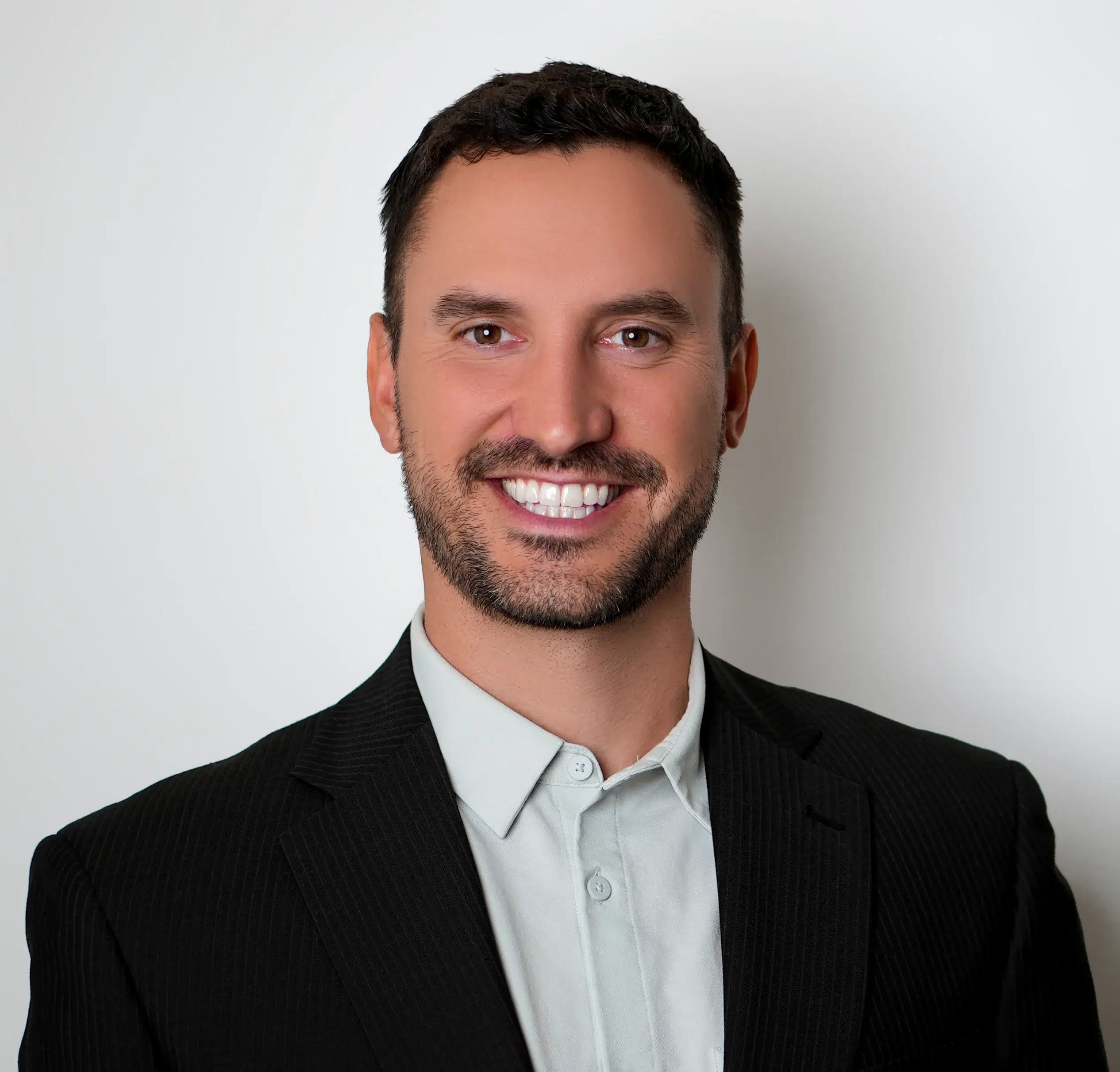
Rob, Founder of Public Adjusting Marketing
Rob is one of the country's top lead generation marketers by budget managed, directing $1,000,000 a month in SEO and $6,000,000 a month in advertising in personal injury, the most competitive market online, before building Public Adjusting Marketing exclusively for public adjusters. His approach blends lead generation with a brand strategy that grows: leads meet property owners in the moment they need help, and brand builds the trust that gets your firm hired.
Rob was managing that combined $7,000,000 a month when AI answers began naming firms instead of listing them, and he watched in real time which structures earned those recommendations and which did nothing. He built the AI visibility audit around that experience and runs it on his own company first, which is why ChatGPT and Claude both put Public Adjusting Marketing first in its category.